
Operated workflows · UK & Ireland
One manual workflow, run to an agreed standard.
Onboarding checks, credit control, compliance chasing — the document-heavy work that quietly absorbs a headcount and never gets faster.
We do not hand you a tool and leave. We map the workflow, run it, and report cost per case, cycle time and exception rate every month. When a case is wrong, a named person is accountable — not a system.
£2,000–£5,000, about a week.
It ends in a number, not a proposal.
Derry~Londonderry · working with teams across the UK and Ireland
The four we take on
All four- Subcontractor onboardingCommercial or finance lead in construction and trades
- Client onboarding & AMLPractice manager or MLRO in accountancy and professional services
- Credit controlFinance lead or financial controller
- Document intakeOperations lead in any document-heavy back office
If yours is not on this list, it is probably not a first engagement. Ask anyway — the answer takes one email.
Engagements start at
£10,000
A pilot is £10,000–£40,000 over four to eight weeks, quoted only after a £2,000–£5,000 diagnostic has measured the workflow. If that is the wrong order of magnitude for the problem, this is the wrong supplier, and it is better for both of us to know now.
This fits if
- You run operations, finance or a practice at a firm of roughly 50 to 500 people
- There is a document-heavy process your team does by hand, every week, in the UK or Ireland
- You can name the process, and you know roughly what it costs you to run
It doesn't if
- You want a tool your team configures and operates themselves
- The process changes shape every time it runs, or nobody can describe how it works today
- You need it live next week
How we work
No bench. No handover. No day rates.
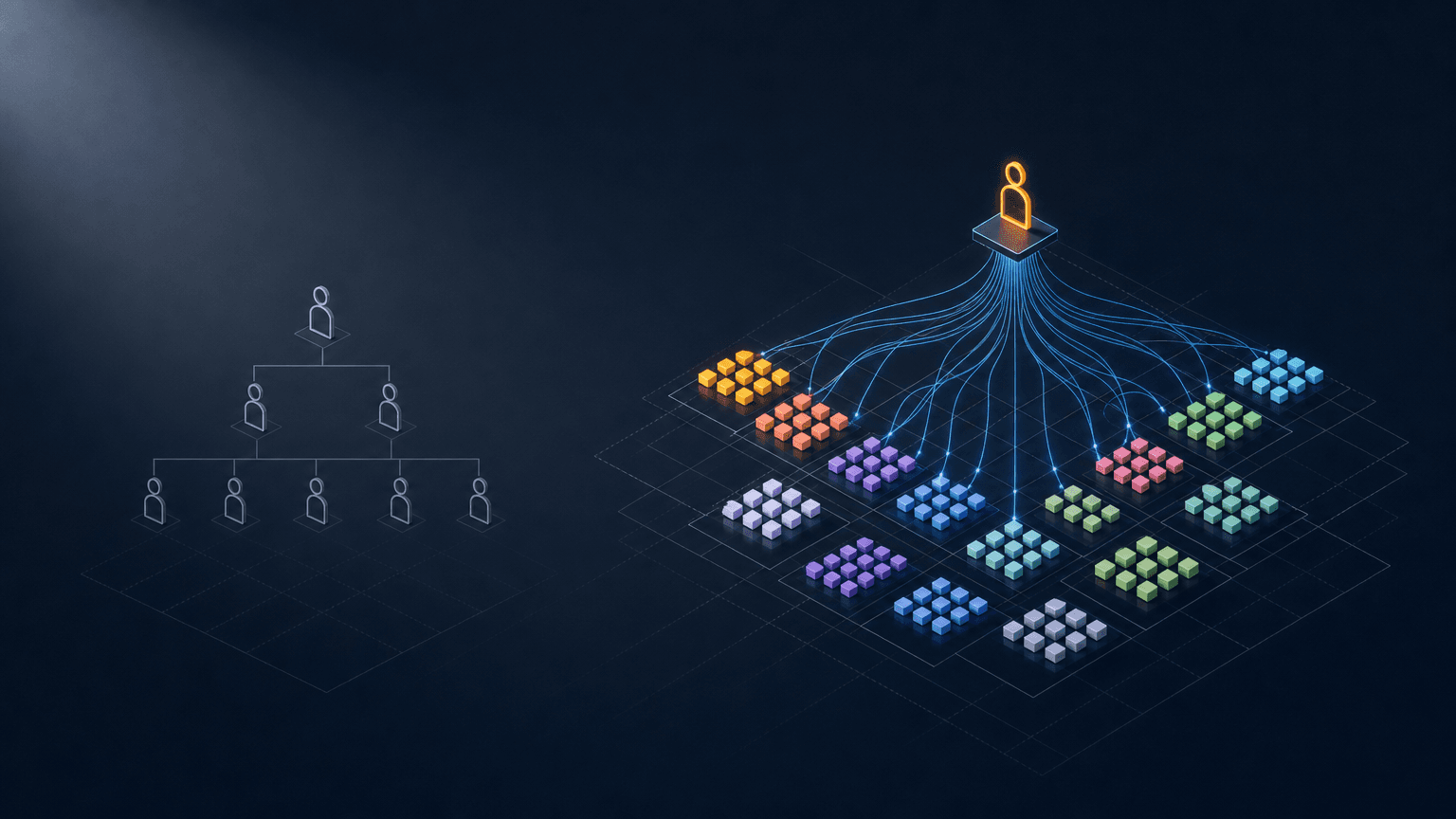
The obvious way to build this was as a consultancy: hire a team, bill their time, grow by hiring more. We didn't build that.
One operator runs the work, carried by a fleet of codified agents. That is a delivery decision, not a philosophy — and it changes three things you can hold us to.
The person who scoped your workflow is the person accountable when a case goes wrong. The price is agreed in writing before any work starts. And what we can take on doesn't depend on who we managed to hire this quarter.
- Fixed price
- Agreed in writing before any work starts.
- One named owner
- For every exception, for the life of the engagement.
- An accuracy bar
- Agreed with you, then measured and reported monthly.
Why now
Two things changed. One has a date on it.
Everything below is either dated or observable in your own business. We have cut the parts that were neither.
- EU AI Act enforcement 2 Aug 2026
- Transparency obligations and enforcement powers commence on 2 August 2026. The high-risk obligations most people are bracing for have moved: Regulation (EU) 2026/1744 pushed Annex III systems — employment, credit, essential services — back to 2 December 2027, and product-embedded systems to 2 August 2028. Most vendor sites still quote the old date.
- The work nobody owns Still done by hand
- In most firms of 50 to 500 people there is at least one process running on a shared mailbox, a spreadsheet and somebody's judgement: supplier onboarding, credit control, claims triage, compliance checks. It works, it is nobody's job to fix, and it quietly sets the ceiling on how fast the team can grow.
Source — EU AI Act enforcement: Regulation (EU) 2026/1744 (“Digital Omnibus on AI”), Official Journal of the European Union, 24 July 2026 · Regulation (EU) 2024/1689 (AI Act), Art. 50 and Chapter XII.
What you actually get
Most suppliers hand you an automation. We run the workflow.
The difference shows up on the day something goes wrong, which is the day that decides whether this was worth doing.
Delivered automation
- An automation, handed over
- It works on the cases it was built for
- When it breaks, it is your problem to notice
- Nobody is accountable for the output
- You find out it drifted when someone complains
An operated workflow
- A workflow we run, to a standard agreed in writing
- Exceptions are expected, caught, and worked
- When it breaks, it is our problem, and you hear it from us
- A named person owns every exception
- Drift is measured continuously, not discovered
Four numbers, agreed before we build and reported every month.
- Cost per case
- Comparable to what the work costs you today. The only number that survives a CFO.
- Cycle time
- First contact to done. What the rest of the business actually feels.
- Straight-through rate
- The share finished without a human touching it. Honest capability, not a demo.
- Exception rate
- How often it needs a person, and what for. Rising exceptions are the early warning.
What we do not report: hours saved, productivity percentages, or any figure without a denominator. Those are unfalsifiable, and a number you cannot check is worth less than no number at all.
See the 4 workflows we take onHow the work is run
Four stages, and you hold the gate at each one.
Agents do the repeatable part. A person approves anything that carries risk, and every approval is recorded — so when you ask six months from now why a case was handled the way it was, there is an answer rather than a guess.
Map it with the people who do it
We sit with the team that runs the workflow today and write down what actually happens — including the parts that are not in any procedure document, which is usually where the exceptions live.
You approve the process map and the accuracy standard before anything is built.
Build against that standard
The workflow is built to the standard already agreed, with the integrations named up front and the limits written down. Fixed price, agreed in writing, not day rates.
You approve what runs unattended and what always stops for a person.
Run it in parallel first
It runs alongside your team on real cases, and the two are compared on the same measures. Nobody has to trust a demo — you are looking at your own work, done twice.
You decide when it takes over, on the numbers rather than on a date in a plan.
Operate it, and report
Exceptions worked, drift watched, and cost per case, cycle time, straight-through rate and exception rate reported every month. Rising exceptions are the early warning, so they are surfaced rather than absorbed.
You can end it. You keep the code, the configuration and the documentation.
Why one operator can carry it

Around fifty codified agents do the repeatable work — reading documents, checking registers, chasing what is missing, assembling the file. They are how the work gets done, not what you are buying.
What you are buying is a workflow that runs to an agreed standard, and one person who is accountable when it does not.
Who is accountable
When a case is wrong, you call me.
I am Pavel Cherkashin. Eighteen years building and running software teams before this, most of it on systems where being wrong was expensive.
There is no account manager between you and the person who built the workflow, because there is no account manager. That is a real limit on how much work I can take at once, and it is the reason the engagements are shaped the way they are.
What you get in exchange: the person who scoped it runs it, and the answer to “why did it do that” comes from someone who actually knows.

Objections
The six questions we get asked first
Including the two where the honest answer is that we might be the wrong supplier.
One workflow. Something manual, document-heavy and repetitive that runs on a queue — supplier invoices, client onboarding checks, credit control chasing, compliance evidence gathering. Not a department, not a system replacement. If a workflow cannot be described as a queue with a start and a finish, it is the wrong first one.
Start here
Name the workflow. We will tell you what it costs to run.
A diagnostic is £2,000–£5,000 and takes about a week. We measure what the workflow costs you now — volume, cycle time, cost per case, how often it goes wrong and why — and you keep that write-up whether or not you go further.
If the measurement says this is not worth doing, we will say so. That is a cheaper outcome for you than a pilot, and a better one for us than a client who regrets it.
Or email pavel@neomigrate.ai with the name of the process. That is enough to get a useful answer back.